School Library as a Technology Leader and Technology Plans
Through my MLIS coursework, we have contemplated the topic of advocating for the library. I have thought about collaborating with grade-level teachers in the elementary school library and finding ways to incorporate the community into library events. I found the topic of using an annual report to advocate for the need for a library and the correlation on student achievement to be extremely useful. A few takeaways that I gathered regarding the process of implementing an annual library report are: begin data collection early in your career, highlight the data so that it tells a story to administration about the impact of the library, and keep it brief so that an administrator will read the entirety of the report (LaGarde, 2019). In addition, the format of the annual report is important; the report should be made available in a digital format so that its outreach is vast throughout the school community. The annual report is not only a tool to reflect upon at the end of a school year, but can also be utilized as a planning tool for the new school year (Abercrombie, 2017). The examples of various libraries’ annual reports provided in the module gave me a solid perception of how to create a report and the manners in which I would disseminate this information. As a parent of 3 children in elementary, middle and high schools, I would appreciate this kind of data regarding library services offered through the school and I will be incorporating annual reports in my future job as a librarian.
I selected to further analyze the Book Creator tool from the AASL Best Digital Tools article. Book Creator is a tool for students to create their own books and tell their stories in a multimodal format. I am a firm believer that storytelling in the library is especially important and Book Creator allows students to transform those stories into a book format. This app allows students to save their work from each school year, so they can witness their growth as they progress through school. Also, Book Creator allows for teacher involvement with the curriculum; teachers can utilize the tool to create presentations for their students that they can engage with. Book Creator is a way for students to become authors and ultimately publish their own books. https://bookcreator.com/
American Association of School Librarians. (2024). Best digital tools for teaching & learning. https://www.ala.org/aasl/awards/best
LaGarde, J. (2019, May 21). It’s annual report season! Here are some tips to help you effectively tell your story. The adventures of library girl. https://www.librarygirl.net/post/it-s-annual-report-season-here-are-some-tips-to-help-you-effectively-tell-your-story
Monday, September 16, 2024
Information Literacy and Student Learning
My personal daily information diet consists of news sources, social media and job related updates. I listen to a 15 minute podcast each morning which provides me with a quick recap of popular news. I utilize social media tools during the day to keep in touch with friends and family members. In addition, I found myself readily fact checking the most recent presidential debate, which provided me with additional, current information during the debate. I also utilize Instagram and Facebook for networking with other librarians and kindergarten teachers. I have found these resources to be invaluable with lesson planning, behavior management and classroom management. The school that I work in provides us with daily updates through emails. Also, the administration keeps us abreast with policy changes to education within the state. These policy changes typically spur me to conduct further research on my own. In the classroom, we utilize Sora and PebbleGo with students, which were two technological resources referenced in the American Association of School Librarians’ (AASL) article (2024) on the Best Digital Tools for Teaching & Learning.
Through the module readings this week, I recognize that a librarian’s informational diet should consist of keeping abreast of current technology trends and utilizing these resources to educate students. I bookmarked several of the resources from this module as reference tools for my future role as a librarian. I found Google’s Be Internet Awesome (2024) website and videos to be especially helpful. A librarian educator has a responsibility with educating our students to become digital literate and to ultimately provide them with the tools to keep them safe while online. It is an interactive website that students can engage with learning about tools and resources which keep them safe in our digital world.
In addition to digital resources, librarians must keep abreast of current trends in students’ and coworkers’ interest with reading materials (All4Ed, n.d.). All students should be able to find representation within the public school library. To help with this, librarians should readily be perusing book award winners,, social media platforms and cross checking these platforms with verifiable journals, like the School Library Journal.
I have a husky dog with a fun personality and I wanted to see her as a rapper. :-)
Tuesday, September 10, 2024
Diversity and ISTE Standards
The module for the week addressed diversity in technology and the integration of ISTE and AASL standards. The lack of equal access to all students with technological resources was concerning to me. The Code.org (n.d.) article highlighted the discrepancy of equality for all students regarding computer sciences and the detrimental effects that occur for students without this access. Specifically, females and students of color are mostly impacted by the lack of access to these resources. Computer science courses are a necessity to prepare students for collegiate work and ultimately the workforce (Valenzuela, 2022).
One way to improve access with technological resources is to offer technology programs to all students. Technology integration should no longer be a choice. Bias should not exist that promotes computer science fields to a specific gender or ethnicity. Our school utilizes a rotational schedule for related arts, each class receives library instruction every 7 days. As a school librarian, I can incorporate technology into the media center’s rotational planning, for all grade levels and classes. As I have previously learned and discussed in education and library sciences coursework, not all students learn in the same manner. The same concept applies to computer science coursework. As a school librarian, I must be cognizant that the technology material which I am teaching reaches all students. One educational concept that Valenzuela (2022) discusses is through project-based learning which gives the students ownership of their learning experiences. As the school librarian, I would facilitate computer science group projects that encourage students to work together, building their rapport and sharing the knowledge that they are learning (Valenzuela, 2022). Being mindful and understanding of the fact that students come from various backgrounds and experiences helps bridge the gap with access to technology and computer science coursework.
The readings and lectures for the week have provided me with an opportunity to envision how I will incorporate technology into my future school librarian role. Not only is it important for me to facilitate learning with the students, but I also must keep abreast of technological tools.
References
Code.org. (n.d.). Code.org's approach to diversity & equity in computer science. Code.org. https://code.org/diversity
Valenzuela, J. (2022, November 18). 3 ways to ensure that all students have access to computer science. ISTE.org. https://iste.org/blog/3-ways-to-ensure-that-all-students-have-access-to-computer-science#:~:text=Equity%20in%20CS%20requires%20an,equitably%2C%20in%20succession%20and%20effectively
I studied copyright in ISCI 701, so this was a welcome refresher on the copyright policies. I am relieved to understand through the module readings and lectures that I will not be the "copyright police" for the school where I will work. However, I appreciate having an understanding of copyright and fair use which I can provide professional development lessons to school educators and administrators. Teachers and administrators should have a basic understanding of what is protected by copyright and also the different items that are not protected and how this applies to education. Russell's (2019) article addresses copyright by recording and publishing storybook readings on the Internet. Through analyzing the four factors of fair use, Russell discusses how these stories published on the Internet have a low risk of copyright infringement. The article applied the four factors test of fair use in an easy-to-understand scenario and I feel that this is the type of scenario that can be addressed for professional development within the school.
Open Educational Resources
As an educator, I appreciate and value the use of open educational resources (OERs) for student learning and advancement. OERs can create equality among varying educational systems through the flexibility and convenience of valuable resources being available to all students. Not all schools can afford textbooks and OERs can provide schools with a cost-benefit by offering students access to high-quality resources. The only caveat is that the student must also have access to technological supporting devices to access the OERs. In addition, I value the learning experience of students through the engagement of OERs, students are not passively learning (IFLA, n.d.).
Social Media
Librarians are transforming the outreach to patrons, students, parents, and community members through the utilization of various social media outlets. I was energized and motivated by the various articles that addressed how librarians are using social media to reach their communities. For example, Jones's (2020) article inspired me to set goals for myself when posting about library initiatives. Parents and caregivers of students need to see what their students are learning in the library. I already follow many librarians on Instagram and TikTok. I love the ideas that librarians post for read-alouds and activities in the classroom. As a future librarian, I will be posting weekly about library initiatives, book reviews and student involvement.
References
IFLA. (n.d.) Open educational resources and libraries: a briefing. [PDF]. Blackboard. https://blackboard.sc.edu.
Jones, A. Get your self(ie) out there: My year as an AASL social media superstar. [PDF]. Blackboard. https://blackboard.sc.edu.
Russell, C. (2019). Tackling copyright concerns when taking storytime online. [PDF]. Blackboard. https://blackboard.sc.edu.
Hello! My name is Jessica and welcome to my blog! I go by Jessica or Jess and my preferred pronouns are she/her/hers. I reside in Fort Mill, SC, and am a kindergarten assistant in the Fort Mill School District. My undergraduate degree is in Business Administration and I worked for several years in the marketing and finance industry. I made a career change and became the State Scholarship Coordinator for the University of Florida. While at UF, I earned my Master's degree in Educational Leadership with a focus on higher education administration. I took a break from my career to be a stay-at-home mom for my children. I began subbing at our local school district and discovered a passion for working with elementary school students. I have been a kindergarten assistant for 3 years.
I am in my second year of the MLIS program with the school track and EDI certificate. I will start my first internship next semester. My primary goal for this semester is to understand and utilize technology effectively in the elementary school library setting. I have really enjoyed using and playing around with Canva for many of my course projects. As an undergraduate student, I predominantly used Microsoft products. I now understand and appreciate the ease and user-friendly platform of Google.
Fun fact - I sang with a choir in college and we performed at the White House.
Here is a picture of myself and my family
I am excited for this course and getting to know you!
I have attended story times at different public libraries for over 10 years with my children. I felt that I had a good concept of what makes story time work and how they can quickly derail. Greene and Del Negro's (2010) chapter on program planning clearly addresses how storytellers should plan for their sessions. There is a section of the chapter that offers suggestions of ideal books for different age groups, which is very helpful. My biggest takeaway from this chapter is the need to be flexible. Plan and be flexible should issues arise to take a different route with your story time session (Greene & Del Negro, 2010). With this planning and being flexible is developing a connection with other librarians. Engagement has increased among librarians, especially with social media outlets, like Facebook (Barchas-Lichtenstein et al., 2020). Collaboration with other librarians and sharing ideas will help me, also, develop successful story times.
I appreciate the idea of incorporating family storytelling events for a public school library. From my personal perspective, caregivers rarely attend events in the library at their child's school. Inviting families into the school library, helps promote a sense of community and gives librarians an opportunity to listen to the needs in their community. Plus, story time connects the caregivers with their child's literacy development by providing an additional outlet for caregivers to engage with the child. A librarian can create family story times based on themes, like seasons and holidays. The family story time needs to be effectively marketed to ensure attendance (Haver, 2014). I would utilize the school with this communication. Our principal does a very good job with communication to our community. In addition, we have weekly communication folders that go home with all students that describe the events going on at the school.
The following is an example of an online family story time provided by the Wake County Public Libraries
Inviting a local author to story time provides students with the author's perspective on their book and writing. I have attended a story time at our public school in Massachusetts, where an evening was designated to a local author presenting their book to the community. The author discussed how they developed the idea for the book and was able to read the book in the voices, that they created for the characters. An author presentation at the local library is beneficial for students because they can envision themselves as the authors. Furthermore, incorporating this visit with family story time, brings the community into the library setting.
The following is a clip from a local author in Springfield, MA, which is near where we lived. I selected this clip because you can see the excitement on the students' faces from Ty Allan Jackson's visit.
The readings also discussed student and author collaboration on stories. Pigeons is an organization in Australia that partners a student with a published author to tell a story. The authors guide the students through the art of storytelling to help the student effectively tell their own story. The project helped students with their literacy and writing development and also their creativity. Ultimately the Pigeons project gives the students a voice for their ideas to be heard and express themselves (Watkins et al., 2012).
I have addressed this idea in previous blogs, but I truly believe that it is extremely beneficial for students to learn and craft their own stories in a public school library program. Storytelling helps students collaborate with their peers through humor and entertainment. Students telling their own stories encourages intellectual freedom and the ability to discuss topics that they would not feel comfortable discussing in the general classroom. In addition, students are sharing stories that are important to them, either about their family, culture, or life experiences (Piipponen and Karlsson, 2019). I live in a diverse community with a significant population of students from Indian families. As a school librarian, I really think that the storytelling would provide students from other cultures with the mode to express their cultural background and beliefs.
I have many ideas to formulate into plans with my future position as an elementary school librarian. First and foremost, I want to craft a story telling program that builds a foundation for story telling in kindergarten and builds upon this framework in subsequent grade levels. Also, in order to gain collaboration and support from the community, I want to open the doors to the library and create a family story time event, either with a local author or centered around a theme. I believe that forming alliances with other librarians is critical to my success in garnering other ideas.
References
Barchas-Lichtenstein, J., Norlander, R. J., Fraser, J., Fournier, M. D., Voiklis, J., Nock, K., & Danter, E. (2020). Categorizing library public programs. The Library Quarterly: Information, Community, Policy, 90(4), 563–579. https://doi.org/10.1086/710259
Greene, E. and Del Negro, J.M. (2010). Storytelling: Art and technique. (4th ed). Libraries Unlimited.
Haver, M. K. (2014). Books, children, dogs, artists: Library Programs for the entire family. Medical Reference Services Quarterly, 33(2), 211–217. https://doi.org/10.1080/02763869.2014.897523
Piipponen, O., and Karlsson, L. (2019). Children encountering each other through storytelling: Promoting intercultural learning in schools. The Journal of Educational Research, 112(5), 590–603. https://doi.org/10.1080/00220671.2019.1614514
Watkins, M., Macintyre, P., and Grant, G. (2012). ‘Aliens with Einstein heads’: Creative storytelling partnerships between child, author and artist. The International Journal of the Book, 9(3), 53–66. https://doi.org/10.18848/1447-9516/cgp/v09i03/36947
This week's selection of readings:
I really enjoyed the selection of non fiction readings for the week. I love this genre and can not wait to explore it with an elementary school audience. Non fiction stories show students how ordinary people accomplish extraordinary things in everyday life. For example, a young boy curious about the world, struggling with homework, too small to excel at basketball, attends Cornell University and becomes one of the most famous doctors in America - Dr. Fauci. Non fiction stories are relatable for students and inspire them to dream of their futures.
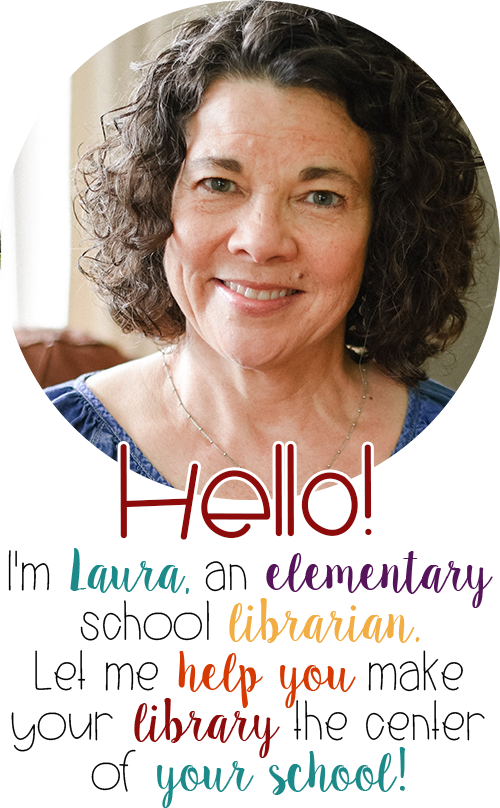
For my blog share this week, I will be highlighting the resources of The Trapped Librarian. I found this blog to be especially helpful for media specialists in elementary schools.
Laura Trapp the author of this blog, has been an elementary school librarian for 18 years and an elementary school teacher for 9 years. She provides a wealth of knowledge on all things related to library programming, managing library collections, and supporting the needs of students. I found her blog to be very user friendly and easily accessible for the information that I was seeking.
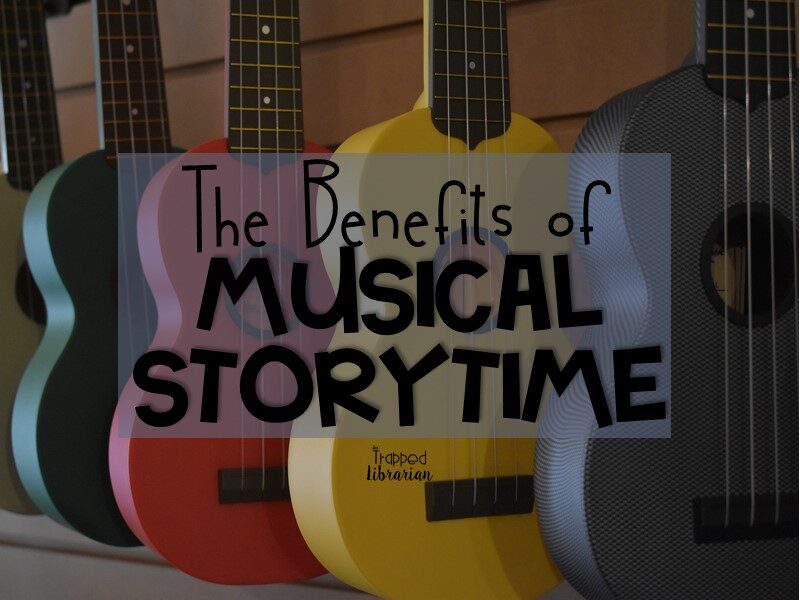
I selected the story time category listed on the word wall of the page and was presented with several articles about different story time themes. I found the article about the benefits of musical story time very interesting because we have also been studying this concept in our storytelling class. Beginning the class with a brain break, such as a musical song, helps students get out their "wiggles." After the brain break, younger students are better prepared to settle down and listen to a story. I have a musical background, so I really enjoy seeing examples of incorporating music into the library story time. Trapp (2022) highlights that a consistent song to open the library session increases engagement of the students because they know what to expect when they come to story time.
The blog highlights different themes, book selections and activities around the months or holidays. I found this especially beneficial for planning purposes. I have many ideas that I would like to incorporate into my future role as a school librarian. Trapp's blog showed me a better way to organize those ideas and provided me with newer ideas to use in the library. For example, Trapp's (2022) May post was centered around wrapping up the end of the school year and keeping the students engaged. She gives ideas for promoting summer reading, especially with 3rd - 5th grade students.
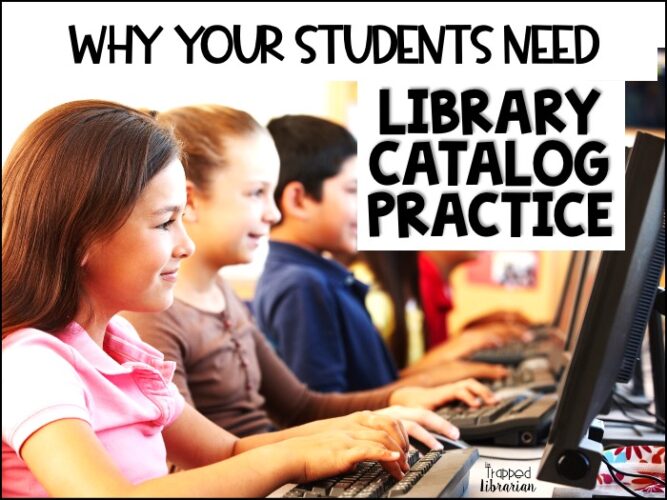
I am currently taking the MLIS course, Information and Organization Access. We are learning about the various cataloging methods, information retrieval and encoding. With all my coursework, I envision how I will utilize that information in my future role. Trapp (2021) shares a blog regarding teaching elementary students how to use the cataloging systems and the importance of teaching those systems to students. Trapp (2021) builds the framework with kindergarten students and builds upon this knowledge each year. She provides (for a fee) a bundle of resources to use with students that are 11 themed units regarding the card catalog system. A program like this maybe worth pursuing because it not only teaches the students how to locate the resources they desire but also gives them the independence to use the library effectively.
As future librarians, the need for advocacy for the library has been impressed upon us. We must be ready to advocate for funding to provide the services and resources that meet the needs of our communities. Trapp's blog creates an entire section related to advocacy for libraries. One part of that advocacy is collaboration within the schools with the administration and classroom teachers. Trapp's (2022) article provides librarians with ideas for more collaboration with administrators and teachers.
I thoroughly enjoyed the knowledge that I garnered through researching the blog, The Trapped Librarian. This blog provided me with many opportunities to envision ideas that I want to use in my future school library. I am excited about incorporating music into the library program. Not all students learn the same way, by incorporating music, I maybe able to reach another sector of students. Also, the application of tools to teach cataloging helped me immensely with programs I can utilize to teach these concepts. I highly suggest checking out The Trapped Librarian!
References
Trapp, L. (n.d.). The trapped librarian. The Trapped Librarian. https://trappedlibrarian.org/
Trapp, L. (2020, August 3). The benefits of musical storytime in the library. The Trapped Librarian. https://trappedlibrarian.org/tag/storytime/
Trapp, L. (2022, May 18). May library lessons. The Trapped Librarian. https://trappedlibrarian.org/2022/05/may-library-lessons/
Trapp, L. (2022, November 14). Why your students need library catalog practice. The Trapped Librarian. https://trappedlibrarian.org/2021/01/why-your-students-need-library-catalog-practice/
Trapp, L. (2020, June 22). More ideas for collaboration in the school library. The Trapped Librarian. https://trappedlibrarian.org/2020/06/more-ideas-for-collaboration-in-the-school-library/








.jpeg)


.jpeg)